Getting to use the at protocol for Micro Blog
Micro.blog is great because it helps you to bring. Hello World! I’m going to write more on this, so stay tuned.
How to set up your micro blog with Fediverse
How to set up your micro blog with At protocol
Insert photos?

First book of the year: Curry
Finished the first book of the year - Lizzie Collingham’s, Curry - a tale of Cooks and Conquerors. The book is about the origin and development of curries. Curry is a sauce based food where the food you want to curry is braised in a sauce of spices. You marinate meat or fish, then fry onions in oil, add spices, meat and stock, gently simmer to get a thick sauce where you braise the food item. The process can take anywhere between an hour and your food is ready. The point is that, curry is a misnomer. In India they cook different styles of braised meat in the form of qorma (milk and yogurt based sauce), kalia ( Persian, light gravy), food marinated and cooked in steamed pots, and so on. The book is a traverse of the rich history of India from the days of spice trade to modern times, and it has excellent recipes worth trying out. The book is good but I thought the author was a bit unfocused and lost track at times.
Annual Review 2025
Things that went well
Problem resolution at workplace
The last year began in a difficult note, when I had fend a wrong accusation against me hanging over my head and I was thinking of the response that I needed to draft and the meetings ahead for the year. Some people were particularly disgusting to my experience. I forgot now what we did in the first week of January but I was busy drafting responses and waiting for a hearing with that bastard. Phenomenal help from AH and Mou has been amazing source of support throughout. The best thing that went well was my strong rebuttal and response. One of the biggest lessons learned was how to draft responses without using emotional languages even when people attack you and provoke you; learn to be calm and determined and focus on facts. The focus on facts and derivation was really helpful lesson in many ways. As it happened, the resolution was not entirely to my satisfaction as they still decided to issue a written warning.
Kolkata Visit
I also had to prepare to get the needed documentation from India for my medical and other credentials, particularly the one from the University of Calcutta about my name, that me, Arindam Basu and Arindam Bose are one and the same person. I had to prove who I was.
A trip to India was in order. The best things were to get to know people like Subhasbabu at the Medical College office, who was uber helpful. He not only arranged the nice letters from the Principal of Medical College, but also helped to direct me to the right office at the Calcutta University. I was in India between 4th and 20th
- Departure, 5th April, Saturday at 11:50AM SQ298, then from Singapore it will leave about 20:40 hours their time and reach Calcutta about 10:00PM their time.
- Return, 18th April, Friday from Calcutta around midnight to Singapore and will have to stay at Singapore for all day Saturday for the flight back to Christchurch, SQ297 that will land here on Sunday the 20th April at 9:30AM
On 9th April, I visited Medical College and Calcutta University and it took me three trips to Calcutta University to finally get the certificate and names sorted. Apparently, they go by the name listed on the mark sheet of the last examination that qualifies a student to enter the University and in my case it was the school leaving examination. It was nearly 40 years ago, so there is no way to correct anything at this stage (nor is it perhaps necessary other than satisfying the curiosity of a few people!).
Calcutta University Library was fantastic, and although I had written several emails to the Librarians trying to establish some form of collaboration with us, did not go far. Anyway, but the visit was fantastic, so this was a high point I’d say. Sometimes you do gain unusual perspectives and knowledge. The other nice thing about the trip was my visit to Sri Aurobindo Ashram and a short meditation there. Loved it. A few days of tranquility and fun. Anyway, the trip to India was important for many reasons. One was of course this resolution. The second thing for which I am thankful to life is that I was able to connect to old friends and family. Took my cousin and her daughter to lunch, met mum after a long time. Had excellent few days of meditation at the Lake Buddhist Temple. Nice walks around the Lake.
Family Vacation, three times
Three family vacations, one was in the Glaciers and the other was in Australia. Both were unusual in the sense that I did not carry any work when I went on the vacation. It helped to relax and gain new perspectives. Immediately after returning from the India trip, we went to the Glaciers. See www.flickr.com/photos/19… A few days of peace and tranquility in the middle of cacophony of life. In the glaciers we had the first experience of sea kayaking. Beautiful setting and loved it.
In February, we went to Hokitika, Dorothy Falls, and Lake Kaniere, three beautiful places.
Then in December we had visited Australia’s Great Barrier Reef, rather the Whitsundays. Another life changing experience, as we got to be in the depth of the ocean. First time experiences of taking a helicopter ride.
Teaching
Teaching went well this year, with student feedbacks expressing their satisfaction. The aspects where they thought I did well was my kindness with the students. The scores were high. The class strength in all the four courses were higher than the previous years. Not sure how the second semester went, but overall it was well managed.
Research
This year the Human Digital Twin Research picked up pace. Although we did not publish any paper from the research yet, we were able to recruit participants for the first phase of the study. The research proposal at the Ethics committee was successfully defended. The team got started on working. It is time to start building more collaborations. This year, we got started on the research project, we set up a webpage, here: humandigitaltwinstudy.canterbury.ac.nz We started recruiting participants. The team got strengthened as Professor Julia Rucklidge joined us. We submitted two grant applications. One went to the first round of HRC and the other was with the Diabetes NZ. Participant recruitment was successful, we have now about ten participants. I am happy about the speed of progress (see notes on next steps) In other research area, Kai Yu submitted his thesis, so this completion was a good thing. Hamu needs to finish and submit next, on the cards.
Services
I was happy that this year, I was part of two assessing committees with the New Zealand HRC and in 2026, I will be part of the Marsden Assessment committee. Being part of these committees are useful and helpful to understand the state of current research in the country. These are also useful for getting to know other people on the panels and it is in general a good experience.
The second aspect that I am particularly happy about is my drafting of a series of emails to the Selwyn District Council official who thought that they wanted to shutdown our book club. We have run a book club of interested readers for the past ten years (I have bee associated for the past five years or so), and this year, citing their inability to provide Library Staff, and moved us to a private group and we’d have to pay for it. We protested and I helped the group to draft three protest letters.
Starting a series of routines and experiments
This year, I have started a series of seven non-negotiable that I’d do everyday and continued with the process. These, in no particular order are as follows:
- About 24 minutes of meditation in the morning as the first thing on waking up
- Read Sri Aurobindo’s Synthesis of Yoga everyday and note about it. The notes are in Medium here: medium.com/p/a1aaeaf…
- Go for Exercise (about an hour or at least 30 minutes)
- Read and reflect on Alan Wallace’s and Contemplative Resource for about an hour
- Work for 1.5 hours on the Human Digital Twin project
- Cook for at least one hour a meal for the family
- Call my mum
These six things were non-negotiable and had to be done EVERY day. I was happy that I was able to stick through the entire list. There were challenges that I will write later here in the challenges section but overall, I was able to smash through the processes.
I ran this in the form of an experiment and I am happy that most of these things went well. The exercise routine became a habit that’s worth mention. Sri Aurobindo’s Synthesis reading was really useful, and it helped that I also got to read with the group. The recordings are stored here: vimeo.com/114829365… and here www.infiniteconversations.com/t/synthes…
Completing the Contemplative Sixfold
This year I completed the Sixfold Matrix of Mental Balance, offered by the Centre for Contemplative Research led by the team inspired by Lama Alan’s teaching (teachers were Anita Milicevic, Eva Natanya, and others). Six months of fascinating contents, and happily I was able to complete all the modules. They said this was a “teachers' training” programme, and I am not entirely sure what it would mean. But that I was able to finish the programme requirement, I’d like to count as an accomplishment that went well. It involves hours of reading and reflections and discussions. I also tried my hand at leading a few rounds of discussions for the group using Zoom.
Editing the book
This year the book editing project went far better. At least there were moments and at the time, we are gelling as a team, and hopefully the project of at least getting a book by the end of March does seem like a good possibility.
Happiest Moments in 2025
In recounting 2025, there were moments where I was indeed happy. Happiness to me here denotes that I was able to experience a spirit of joy. The first distinct moment this year was in February. We were holidaying in Hokitika and Mou presented me with an iPhone, a device that I particularly “love” and I had this as a gift (a first one!). I was overjoyed and it was a moment of touching the sense of joy, surprise and wonderment. The second moment was in April when we visited Ōkārito Lagoon and as a family we went kayaking in the lagoon. At first I was a bit nervous as I am not a swimmer, but nevertheless the joy of boating and kayaking in the lagoon was such a beautiful experience that it sparked a sense of joy! There were many moments of joy throughout the year, and the next one that I can recall as a happy moment was when we were in the inner reef in the Whitsundays. We were on a small boat and we were in the inner reef region. The small rubber dinghy where we were, Maurine jumped off and had a great swim and watched the coral reefs. Mou too jumped in and soon returned to the boat. Along with two other Chinese girls, I was the only one who did not jump in the ocean water to watch the reefs. But soon I gathered enough courage, went down the side of the dinghy held on to the sides and dipped my head beneath the water. A vista of the coral reefs opened before my eyes, it was beyond amazing as the beautiful, colourful resplendent coral reefs were there. I was transmogrified, surely a moment of joy. Another moment of joy was when I finally received the approval of the Ethics committee that we had the green signal to go ahead with the project to recruit participants and each participant that now signs up is a source of joy and happiness.
Compliments
Normally, I do not get a lot of compliments from people, or at least, I tend not to notice much. I know Mou compliments me and encourages me almost all the time, and I am really thankful to her for her compliments. Outside of the family or loved ones, I was particularly happy to receive compliments from my students in their appraisal where they rated my teaching and me as a kind person. I thought that was great feedback. Other compliments came from my friends of the book club who thought I represented them well.
My positive impact on others
I do not know if I have positively impacted anyone’s life this year, but at the least I tried my best to support my family and students as best as I could. I may have pushed but the push yielded results as KY, the PhD student, was finally able to submit his thesis on time. The other person who comes to mind is TG, a student who successfully completed his Master thesis. So, it does seem that I was able to impact the lives of a few people this year.
Things that could have gone better
These were all great, but the year also had its own challenges for me. I always find working in the winter months as super challenging. The days are short, invariably the temperature, the challenges of getting wood and stacking wood on time.
Challenge number one: managing time particularly during the winter months
This is both a challenge of managing time and energy. I know I am more of a night owl than a morning lark, and there are only so few hours in a day. But this definitely was a challenge this year. It has been a challenge for many years to get things organised during the winter months. Perhaps get better dressed warmly and know that winter will be winter and organise accordingly. Get wood on time and develop a strategy to keep the fire going for longer during night so that when we wake up in the morning the temperature within the house is tolerable and make most use of the limited hours available.
Second one, of organising
I had to change an assignment for a class during the end of the semester and that created a problem for some. This is another thing that I need to pay attention. I need to be super organised throughout the year with moving most of the lectures online and set up everything at least ONE week before the class starts. Also recruit as many guest lecturers as I can this year. Reduction is the mantra. Try to find ways to focus on that ONE thing or a few things at most, no more than two to three projects. Organising and making use of time
Third, low on publishing last year
I need to publish more of my thoughts. Consistently,regularly. I think I found my source of error. I think or tend to overthink too much rather than DO stuff. This is a limitation that I must overcome
Four, inability to watch myself
I need to watch myself doing things, saying things, feeling things. I need to keep tab on my feelings, and sayings. I tend to get distracted far too commonly and this is an area that has hurt me. Set a timer and get things done, do not be distracted. In a way, most of my weaknesses and things that I need to do more and think or research less.
Five, grant applications where I failed
Two grant applications failed. The first one was with the HRC looking to pass the first pass for a one million dollar fund to get the project up and running for a randomised controlled trial. Did not go through the first round. Second failure, a grant with the NZ Diabetes where we applied for funds to continue our current work and do further development. Did not work out quite how I wanted it. I needed to start earlier I suppose
What did I want to happen that did not happen
Those two grants. I wanted to be successful, but did not happen. I also wanted to write more papers out of my experiences and the current work that I am doing, did not quite happen. I wanted to finish Sri Aurobibdo’s Savitri and Synthesis reading this year, did not happen. I needed to be at this game.
Things that happened differently than I expected
I have been working at the book project and I wanted a different outcome for the book project. It irks me that people like SBG are trying to undermine my efforts and are downright rude. But anyway, I did not expect the book project to take off in the direction it has. At least it is not dormant any more and we are working towards a goal. I like it but it was not quite how I wanted it to happen. The other thing that turned out different than how it started out was the work with JR where we were planning a smaller piece of work for the endometriosis but it ended up in a different way. Cochrane editors wanted us to write a bigger piece or bigger project. We will see how it ends up.
Gains and insights
Each disappointment and loss has its own lessons for me. I have learned to focus more on the process, facts, and details. I think I need to start early, connect with people more, show up the work and seek people’s comments, harden my skin to criticism, and be at it with endless iterations. I also need to take charge and move along projects, without any expectation from anyone. I need to be deaf and blind to other people. The two grant failures show quite starkly that I need to work closely and start out sooner. Do not wait for the last minute. Also, make use of the available resources and this is a good time to build up the library and annotations, so that the last minute fight for resources is less. Make use of AI to the best, and let the research sit with the AI tools as I fine tune, check correctness and work through hallucinations. Learn to be less dependent on people and stick to a plan.
Lessons for the year
Insights
First, I need to do more and think less. This is my definite weakness. I tend to spend a lot more time reading, procrastinating, thinking and planning but do less. For example, I have spent a lot of time reading and tinkering and experimenting and dithering whether to use Julia or Python for my human digital twin project, rather than spending time to actually get my hands dirty. I know that there are colleagues that have differing views, but ultimately if I think I am better off using one or other software, then I will need to do so. Second, I need to manage my time better. Anne Laure Le Cunff’s ideas of chronos versus kairos time (where time is measured not in terms of hours but in terms of here and now experience is instructive and this is something that’s worth considering. So, set up experiments such as tiny experiments and stick to a plan. Take time and do nothing else in in that period of time other than the task that is most important. Third, ay attention to the lead measures than the lag measures. So focus more on the work at hand and press or push through. Eliminate all distractions at all times, including now.
What have I or how have I improved myself over this year?
Push the clock one year back. On 2nd January, 2025, I was nervous, and I was still writing and speaking stuff where I was not sure or I was writing emotional stuff. Over the years, I have learned a lot more to frame my thoughts on facts and steer that kind of conversations. So an area where I have levelled up is the use of information and become more assertive. For example, when SSM tried to challenge me late last year, I used the help of a colleague to face and the meeting was postponed. This will come up again but this time I will be better prepared. The second area where I have levelled up is that I can muscle through or push through challenges as they come. For example, later in the year, I set up these six non-negotiable and pushed through. As a result my exercise ability went up, and I was regularly hitting the gym. This would not have happened earlier. Slackness is gone. I am a much better cook now, and I have levelled up my game of cooking good food.
Knowing where I am now, what would I have told myself a year ago?
First of all, I’d have told myself to hold fort and be persistent in everything you do, Arin. Always focus on the facts and not your emotions. Do not pay attention to naysayers, and detractors. If needed, come back harder at them. Gather strength. Be persistent, and be focused. Be stingy with your time as you are with your money. Your time and your energy are finite resources. Set a clock and go by the clock. There is value in chronos time as there is value in kyros time. Read extensively but then write and DO stuff, do not just gather knowledge and sit and mull.
My most challenging moments have taught me to …
First be assertive and do not be afraid. Do not rush, but take things slowly. Third, do not be distracted. Set a timer and stick to the timer and get things done. Be ruthless and focused in what you are doing. Protect your time and energy. Play the long game.
Who will I be next year
Let’s pick three important goals.
- First, I will be a lot more kinder and better individual that I have ever been. This means I will focus on facts, reasonings and less emotions
- Second, I want to be more improved in my time management skills. Measure each moment and measure myself every moment, everywhere
- Third, I want to be more process focused. This means everything I do will need to be done with utmost care. They may not be perfect but at least I will put my heart and soul into every aspect of it.
If there would be a SINGLE WORD that can define or be a guiding principle for me in 2026, that’d be “STAY PUT, ARIN!”. I need to stay put no matter how or what new challenge every day bring on. Bring it on, life, test me!
Three resolutions for the new year:
- Be totally focused on the work and projects that I do
- Accomplish the six non-negotiable tasks every day for the next 365 days
- Manage my time and be more process focused
What do I want my life to be like next year this time?
A lot more organised than it is at this time this year. I want to a tidy workspace. Fewer “stuff”, more accomplished. At least six research papers and a book out and published. I want to live a life that can take in challenges and be ready for all uncertainties. Be focused and determined.
Daily Life As Lived
Daily routines and project work are progressing smoothly, despite some personal challenges.
Notes on Modernist Cooking
Notes on Modernist Bengali Cooking
(This is a rough draft and needs attribution and fact checking)
Modernist cooking.
Over the past few days, I have been reading about modernist cooking and their differences from traditional cooking. In traditional cooking, we tend to follow traditional recipes handed down to us from the chefs of the past or our ancestors, without much questioning as to what happens to the taste, flavour, texture, and aroma if we change the recipe or the processes of preparation. Modernist cooking, on the other hand, take the act of cooking similar to a laboratory experiment and enocurages us to consider each ingredient from the view of scientific standpoint, and each step in the process of cooking food as a laboratory experiment and makes us conscious about what we are doing, why we are doing and how we are doing things. In turn, our cooking and food preparation becomes a matter of not just scientific endeavour but touches on the complex psychology of taste and flavour perception and how we may think about the impact of food on humans and environment. This is not the focus of traditional cuisine, where chefs have experimented largely with a number of ingredients and cooking styles. In this sense, molecular cuisine or molecular cooking, or molecular gastronomy and modernist cuisine is distinct from anything we have seen earlier, it is distinct from novelle cuisine, and it is certainly different from people trying new combinations with old ingredients or spinoffs with other flavours.
Allow me to explain. Let’s take the simple act of cooking an egg, or boiling an egg. Normally, consider what I’d do if I wanted to have a half-boiled egg (runny albumen and yolk). Here’s the simple recipe. Boil water and add salt to the boiling water, drop two eggs in it, then boil for about five minutes, and after five minutes, transfer to a bowl filled with ice and water. The egg turns out to have soft white and delectable yolk. Modernist cooking has forced me to ask what happens in these states and why? What’d I do differently? What is the effect of changing the times through which I cook the egg in water and changing the temperature in which I am cooking the eggs. What are the outcomes? These, in terms of modernist cooking, would be parametric egg cooking. For example, if I were to cook egg for four minutes in boiling water, and keep in iced water for three minutes, then the egg would be runny and soft. On the other hand, if I were to keep the eggs in boiling water for about seven minutes, and then stop the cooking in cold water, I would end up with a hard boiled egg.
Modernist cooking has made me question and seek answers for why this should be so. Egg, it turns out, has albumen that has about 90% water and 10% protein and yolk likewise has fat and protein. On the one hand this tells me that eggs have little carbohydrates, and therefore it is a suitable food for people who perforce must consume little carbohydrates (think of diabetics). On the other, it makes me question as to why is this so that while the whites become firmer in the same water temperature, the yolk still remains runny. I also start wondering that a liquid, when subjected to heat, changes its state from liquid to firm. The magic, it turns out is in the way the proteins uncoil and change their structure when they are heated up. At about 90 degree centigrade, the whites change their shape in one way, and the yolk has a different temperature setting for the denaturation (check the facts), This difference in the heat sensitivity accounts for the delectable different “texture” of the eggs when I cook the eggs through a certain temperature and then “stop” cooking by dunking the eggs in cold water.
Some tools and Concepts
As I increasingly adopt modernist cooking style, I increasingly start thinking about what do I need to to make my food preparation more scientific and how may I adapt my food preparation to enhance the taste, flavour, texture, aroma, mouthfeel of the food. Let’s start with some of the concepts that are moot. First in the list is taste. Taste is determined by taste molecules, or more specifically the water content of the food and its interaction with the tongue and the rest of the mouth. Taste is distinct from aroma which are determined ny aroma molecules that are fat soluble molecules that waft from the food through the back of mouth through to the olfactory bulb to the oflfactory cortext and the sensation of aroma of the food. Usually taste, flavour, and aroma occur together in the food we eat or drink.
Concepts of Taste
Traditionally, we used to consider four tastes that are perceived by the nerve fibres in the papillae in our tongues. Back of the tongue we have bitter taste perception, a taste perception that is known to have saved us from consuming poisons in course of our evolution. Bengali foods for example, in our feasts we start with bitters that are typically fried. The bitters are said to have primed the taste sensation for the next set of taste. Salt perception is the taste perception on the middle part of the tongue and presence of salt perceiving receptors are useful for maintaining our ionic balance in the body. Perception of sourness brought about acidic components is on both sides of the tongue and no one seems to know the significance of this taste perception. The sweet perception is on on the tip of our tongue, so food that consists of glucose or similar molecules bind with the receptors that allow us to perceive sweetness in the food (think of lollies, honey, jam, and so on). Beyond these four taste perceptions, we also have another sense perception referred to as “umami”, which is the “feel” or taste in the mouth when we eat something like meat. Just as salt perception is associated with sodium or potassium chlorides, sour perception is associated with different acids whose pH values go lower than four, sweet perception is associated with glucose and similar molecules, and bitter is associated with tannins and alkaloids (think of oils in coffee and bitters in bitter melons), umami perception is associated with presence of gluatmates (amino acids that are derived from proteins typically animal proteins). A useful way to think of umami perception is to think in terms of monosodium glutamate used on Chinese cooking that imparts their unique taste sensations.
Concept of texture
Texture of the food refers to the physical state of the food. Some food items, such as sandesh or paneer or the sweets made from milk in Bengali food items are firm to the mouth. Others such as a smooth dal is liquid but within the liquid there is a certain graininess that imparts a unique texture to the grains of dal in the mouth. Yet, a smooth jhol is liquid or consomme, that has a different texture and corresponding different feel in the mouth. Texture of food is determined by the content of proteins, fats, and carbohydrates that make up the backbone of the food as we put the food in mouth. Texture helps to bind the various components of the food we consume. Texture is determined by the consistency of the food as it is present in the environment and then it enters our mouth.
Flavour
Flavourmolecule and odour molecules.
Mouthfeel
When the food enters mouth, the feeling of a food in the mouth cavity
Types of Food
Gels
Practically everything is a gel, where fluids are trapped inside solids
Emulsions
Emulsifiers or surfactants (Garlic, Soy Lecithin, Egg Yolks) You can use heat to create emulsions Water and oil do not mix, so even with vigorous mixing, after a while water and oil will separate out. In order to stabilise the emulsion, we need molecules that have two moieities: one facing the oil or fat, and the other the water phase
Phase changes
Solid to liquid Liquid to solid Liquid to gas
Cooking techniques
Sous vide
Temperature remains the same both on the surface and inside the food
Whipping Siphons
Direct and indirect spherification
Deconstruction of a food item and reconstruction
Hydrocolloids
Digital Therapeutics for Disease Control
We are building the worlds first digital therapeutics using AI/ML to analyse biological and electromagnetic signals emanating from human bodies and using the analyses to alter the underlying mechanisms to enable personalised prevention.
Let’s unpack each or these concepts. First, at every instant we are alive, we interact with our environment. We receive signals from our environment, we give out signals to our environment. For example, right now I am receiving signals from my environment in terms of the time I have for this presentation, the cues about my audience and so on. At other times I may have received cues and signals in the form of food and beverage and at all times I revive air to breathe and the remaining five senses to interact with the world around me. At the same time, I send out signals. My brain sends out electromagnetic waves, my heart send out electrical signals, the flow of blood in my veins and capillaries send out signals that can be captured and processed, and my blood components and metabolites send out signals to the environment every time I pass urine and faeces, reached out chemicals, and effervesce body odour. My heart rhythm, my respiration patterns are unique to me and together these signals define my physical, mental, and social health snapshots. These cues and signals are altered when I am healthy as opposed to when I am ill. Doctors, in particular internists pick up many of these signals to decide my treatment for illnesses and decide what needs to be done. Until now, there have been two limitations of this approach: (1) almost all of the signals and data that we humans as doctors collect form fellow humans to manage conditions are retrospective, meaning that we get to measure these metrics after an event. For example, for a patient with diabetes, the doctors use a metric glycosylated haemoglobin or HbA1c to plan and monitor their treatment. Glycosylated haemoglobin is a measure of the concentration of glucose in the blood that is attached to a persons red blood cells. Red blood cells have a lifespan of three months and therefore the higher the concentration of HbA1c, the higher the three monthly average of glucose level in the blood. This fact is utilised to monitor patients with diabetes to monitor their level of control and plan treatment. If the level of HbA1c is kept at a level of 48 mol/mol on three subsequent measurements, doctors would claim that such a person with diabetes has reversed the state of diabetes. If the level of HbA1c is maintained at a level of 55 mol/mol, the experts claim that it is possible to avoid serious cardiovascular complications for such a person with diabetes.
This last point is important because here you can see that the chemical signal is treated as predictor or what can happen afterwards. At the same time, the measure itself is a retrospective measure because it can provide any indication only after the fact. This is a limitation we can address using signal analysis and real time monitoring of individuals and then using AI/ML tools to develop predictive algorithms. This is where we are making a difference in our approach.
Our bias is as follows. If we are able to identify, capture, and measure electronic signals that result from underlying biological or physiological or pathological processes, then combine these signals and use AIML to develop individualised models and determine prognosis, and then iteratively attempt and measure such processes. T In turn these help to control the condition.
Tana, a game changer
I have been playing with Tana lately. It’s a fantastic app where I can practically create a digital twin of my day and tweak to find what I did when and all documents when I need them. Amazing.
Evening Meditations
Evening Meditations, 12th August 2025 evening in Sheffield
A long tiring day, nothing particularly remarkable, Had worked on the divi theme for a wordpress blog, probably the hardest thing I have tried in years. Finally found a tutorial that might be useful. On another note, also got into creating a survey using Redcap Software. Another difficult to work but there should be enough tutorials and guides I suppose. I found a tutorial.
The morning Tratak meditation combining Sri Aurobindo’s method and Dudjom Lingpa’s advice on watching the mind was a terrific experience. Alan Wallace advises a 24 minute ghatika time to devote to it. What this is basically is to focus at a point somewhere between your two eyebrows, and then watch your thoughts as they come and go. Learn to watch yourself. This is soothing experience in the sense that you learn a lot about yourself in the process.There are two ways to do so:
- Watch your breaths as the breathings come and go
- Watch your thoughts and mind as the thoughts come and go
Both these activities are useful. I have set a watch timer on my wrist, then close my eyes as I lie down. Ideally, I need to sit up through the process, but lying down in bed is equally enjoyable. We have a savage winter these days here in New Zealand, rainy morning and darkness till seven in the morning does not quite help either. But I started enjoying these quiet meditations in bed.
Book Notes: Tiny Experiments
Book notes: Tiny Experiments by Ann Laure Le Cunff
I first heard about Ann Laure Le Cunff’s book “Tiny Experiments” on a couple of podcasts. The first was focused podcast by Mike Schmitz and David Sparky and the second one was on Bookworm. The book is about organising life rather than a productivity book as such. ALLC starts off with an argument about the futility of linear productivity systems and smart goals. Instead the idea here is that peoples lives are more complex and therefore it is useful to think in terms of building or factoring these complexities. She recommends you engage in small experiments to continuously improve your life.
Pact
A powerful solution is to make a pact with yourself on some regular tasks that you will do an x period of time. For example say you want to avoid browsing a certain distracting web page for 21 days (because 21 days apparently can help you to build a habit). So set a date and start on the task. ALLC gives her own example about writing the book. I have not made a pact yet but it seems a good way to stay on course.
Concept of kairos or time in quality
In the forth chapter of the book she writes about time as Chronos or quantitative time and time as qualitative or time measured in the qualitative aspects. For example some of us fare better during day (larks vs owls), she claims it for real and asks that we monitor our time as to when we are in course of our day to day we are at our best or peak. I know that I used to be quite good at night but I have also observed that my peak performance time seems to be around 10AM. ALLC would advise setting up cognitively demanding tasks around the morning in my case and set up routine tasks that may not take much thinking or admin tasks such as emails and meetings around afternoons when my energy levels tend to slack.
Sequential Time, Rituals, and Exercise
She talks about setting up sequence of tasks and warns against multitasking. One of the other points is about setting up rituals that can move you to a kairos moment. For example, slow walking or slowly brewing a cup of tea. I think it is worth doing these things as I have found a quiet time to do a rapid Tratak type meditation or brewing a cup of tea works wonders for me to being back the focus. Another point that she brings up when you find your energy level sagging is to do some simple exercises , even as simple as a short walk or moving your wrists or shoulders or static exercises.
A Nonconventional Take on Procrastination
She has an interesting take on proscrastinaton which ALLC describes along the lines of emotional issues people have. So anytime you find yourself procrastinating on something ask yourself three questions to troubleshoot: is it important to do it now?is it exciting for you to do it? Do you have the skills to execute the task at this time? If your answer to each of these questions, and you still find yourself procrastinating,it is time for you to search for external factors such as systems issues why you find yourself procrastinating. Perhaps the workload or workplace is not suited. Perhaps the context of the work.
Plus Minus Next Steps Affective Labelling Mapping
Another interesting take is on say a daily or weekly review where you can construct a grid with three columns: write the good things that happened in the day, the work pending or what you did not achieve and in the third column write what will make a difference in the next step. I thought this was a particularly insightful technique.
Two other techniques or rather experiments that she talks about in the book refers to are affective labelling where she advises what you should do if you face with adversities that throw you off. The first technique is to write your feelings (“affective labelling”). The second is to map out the consequences. Now ALLC also says that if, while you are in the second activity and you feel unsettled, a god plan would be to name the feelings and continue. The steps help you to stay grounded even in the face of extreme adversity and help you to stay on course and remain calm.
Indeed it makes sense to me coming from a more meditation and integral yoga background. As Sri Aurobindo writes in several of his lectures and in the Synthesis of Yoga, if you can vision yourself outside of your body and can see yourself “thinking”, that externalisation of the processes are helpful to get you in a state of grounding when the going is tough. Somewhat similarly Alan Wallace, the great Buddhist Lama, commenting on the works of Dudjom Lingpa in his book Fathomng The Mind,writes about understanding or meditating on one’s own mind. In this practice as well, you can learn to tap into your substrate consciousness. So you see that ALLC has a point in how you can remain steady in a state of adversity. I really think these experiments and strategies are worth giving a chance.
Overall, I liked how she framed the concepts of pact, energy mapping at various times, the plus minus next steps for daily review and naming emotions. At times it seemed that there are far more tools and experiments and she has covered a lot of ground in the book. The book is well worth the effort.
Zettelkasten on Micro.blog?
Using Microblogging as Zettelkasten
I was reading Sohnke Ahrens book on Zettelkasten yesterday. I stumbled upon the concept before and tried but I think I was overthinking and complicating the whole thing. Basically it asks you to jot down notes on everything sonewhere. These are called fleeting notes, basically you write and collect everything. At the same time, if you are reading something worthwhile from a literature, say a book as I am reading this notetaking book, create a reference for that book in a reference manager. Athens of course talks about carrying notebooks and pencils with you all the time. Which is good, because David Allen also writes the same in his Getting things done and I think Drafts on iPhone is an excellent example for instant thought capture unless you want to capture using camera which is a good option as well. Anyway. But the real deal with Zettelkasten that I did not understand then, was about permanent Zettels or permanent notes, as it were. You can do zettels in micro.blog.
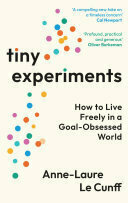
Currently reading: Tiny Experiments by Anne-Laure Le Cunff 📚
Tiny experiments is a book on self improvement.
Manton writes,
“They (referring to Disney art he installed) cannot be recreated by the most advanced AI because they represent something bigger, capturing a moment in time and a film that will be watched for decades to come. I don’t actually know which animator drew them. But I know it was a great artist who — like Hayao Miyazaki — left their mark on the world in a way that AI never can”
This is more nostalgia and history but the post makes an important point about AI and art.
Attack of the lower vitals
In which I write a series of posts about working with Julia for data science through Machine Learning
Julia for plebs, part 1
In which I write a series of posts about working with Julia for data science through Machine Learning
Notes on Integral Yoga
These are my rough notes on Integral Yoga, or how I have dealt with a toxic world.
Here I am. First thing in the morning was to lie in bed, close eyes, focus on the spot between the eyebrows and pay attention. At once other thoughts crowded in, did not resist, was trying to be curious where they arose and watched them arise and recede. I have now even forgotten what they were. But it stuck with me that I need to write down somewhere this feeling.
The idea of integral yoga is a unification of five pr seven processes together. Let’s get to them first.
First of all, start with losing your ego, or better term, egolessness. Egolessness is that principle where you do not self-refer, you do not boast about yourself, but you still maintain a sense of self esteem. This is the hard part. A personal practice that was found helpful was to not refer to “I”, “me”, or in any way talk about myself for about a week. At first it felt awkward and I have turned back the dial a little, but over time the sense of “ego” has receded and that has helped a lot. Particularly in dealing with violent toxic people, this is a fantastic practice because they cannot find a Segway to attack you.
Second, train yourself to see the world in a different light than now; again, where you tune yourself to the beauty and sense you are as much part of everything as everything is as much part of you. Starting with inanimate objects to everyone around you, you feel as part of a giant unified whole.
Third, start separating yourself from your body and train yourself to visualise this. This part is a bit difficult to explain, so here is an example. I started treadmill run, but soon I was exhausted and was wondering when will it stop, I kept looking at the timer, I felt a sense of breathing discomfort as I trained. I started to put this idea of Sri Aurobindo that you visualise your body running staying apart. In a few days’ time, I realised that the sense of exhaustion receded, running was a lot more relaxing. Over time, I have used this visualisation in other aspects of my life, including here where I can visualise myself writing this piece as I type. A slow deliberate typing but that nevertheless I can watch myself “doing a thing”. Actions become more deliberate and relaxing.
Fourth, keep a calm heart at all times. Life throws challenges. The way to keep calmness as I have found is to go silent and go deep inside. In times of stress and in the presence of toxic people and toxic conversations, close your eyes, go deep inside and feel the presence of your inner self, then detach your inner self and watch the interaction. As if you are controlling your own mind from outside. This is not easy, nor intuitive but the practice helps to overcome challenges.
Fifth, start recognising the attack of lower vitals. In Sri Aurobindo’s letters and writings, the word “vital” refer to emotions and think of them as motivational forces for action. In Sri Aurobindonian perspective of Integral Yoga, vitals are tiered lower, middle, upper vitals. The lower vitals are the emotions of fear, greed, hatred, jealousy, intention to do harm. These are part of Nature, prakriti, that visits us from time to time in the path of Integral Yoga, inevitably. There is a struggle between these base feelings and our strife to get on the path of Integral Yoga. The first rule is to recognise the play of lower vitals, then reject them. On the path of progress towards integral yoga, Sri Aurobindo talked about three aspects: aspiration, the state of recognition and yearning to move to the next stage, rejection of these base sentiments that bring in divisiveness and despair, and surrender. The word surrender here refer to the sentiment that we leave the results with the Divine Mother and continue with our lives doing what we do, putting our best efforts in the process. Philosophers like Banerji and others who have studied Integral Yoga has described this as concentric and vertical aspect of consciousness. The concentric state are defined metaphorically by three concentric circles — the deepest circle is the inner psychic. The inner psychic is our true “self”, the reflection of the “Brahman”, in the Vedic concepts according to Sri Aurobindo, and we can focus on this heart centre (this does not refer to the anatomical or physiological cardiac centres) in our meditation and feel the inner calm. Just outside of this circle is another metaphorical concentric ring that refers to the “mental being”, the mind that perceives the world and makes sense of it. Outside of that metaphorical circle is our outer body, the senses and the part that interacts with the world. Sri Aurobindo in Synthesis of Yoga has emphasised in focusing on the inner psychic and that spiritual centre as the guiding spirit. As I write this, the daily practices to deeply focus on that calm inner self is critical for facing the toxic outer world. The philosophers and scholars who have commented on SrinAurobindo’s viewpoints have also commented on the vertical ascent of the consciousness from a lower base. Sri Aurobindo called that mind to a state of Overmind, a state of being that “descends” into the open mental state and prepares one for the “descent” of the Supermind, a “gnostic” state of Omniscience. I do not understand this aspect well enough to write here, but for most practical applications of Integral Yoga, to combat a toxic world, most of us may use most of Integral Yoga without a completely understanding either. This brings us to the sixth aspect of regular daily practices (TBC)
Inner Excellence and Integral Yoga
I was reading this book on inner excellence and was thinking of Sri Aurobindo’s principles of Integral Yoga. In Integral Yoga, there are seven principles
- There is no Ego or egolessness. You give up your false sense of separate existence
- Complete surrender to the Divine. You do that because there is no separate ego and you strive to be one with the Truth, Consciousness, and Bliss that pervades the Universe
- A system of physical balance, so be physically balanced. Sri Aurobindo’s talked about “hatha yoga”, the yogic posture. But it seems reading Sri Aurobindo’s writing the precise nature does not matter as long as you have a system of practice.
- A system of mental balance, or Rajayoga, where the idea is to focus and concentrate the mind sonmewhere in between two eyebrows. Pay attention to your thoughts but do not be attached. Let them come and go
- Knowledge focused ideas where you realise that you are part of an evolutionary process and play of Sacchidananda everywhere
- Your work. The work does not focus on outcomes and you remain unfazed at all times. The work is a surrender to the Divine Forces. Interestingly, this is a point of convergence between Inner Exprience and Integral Yoga.
- A process of Love to the Divinre. Again, another overlapping theme between inner excellence where Jim Murphy writes about the power of knowledge, courage, and love and talks about surrender.
Sri Aurobindo’ derived these themes from his reading of the Vedas and Western text and canons but also his personal experiences. His was a very much here and now practical point of spirituality not just for personal inner growth but for a population perspective.
New Yorker in their Lede reports a valliant effort to save data
New Yorker’s Lede on preserving data where they describe how people are preservign data taken down by Trump administration.
Ok, so you can use micro.blog to write 300 character posts with photos and voice. It is excellent for short posts and you can post links, and some editing like bold and italics. You can post photos like this: … and you can add voice memos, as in a podcast, OK.